 mlederer.it
Treatment of running injuries: a case study
Running is one of the most popular forms of physical activity with numerous health benefits, such as improving physical fitness, strengthening the cardiovascular system and reducing stress. Unfortunately, runners are also at risk for a variety of injuries resulting from overload, improper running technique, lack of proper preparation or external conditions. In this article, we will present a case study of the treatment of running injuries, analyzing the causes of injury, the diagnostic process, the treatment plan and the effects of rehabilitation.
1. The case of the runner: patient profile
1.1 Age and level of progression
The patient is a 35-year-old man who has been running regularly at the amateur level for five years. He participates in marathons and cross-country running, training several times a week.
1.2 Medical history
The patient has no chronic illnesses or previous running-related injuries. In recent months, he began experiencing pain in his knee while running, which has worsened over time.
1.3 Main symptoms
- Knee pain: Pain localized to the front of the knee, increasing during running, especially when running downhill and uphill.
- Stiffness: Stiffness of the knee joint after prolonged running.
- Oedema: Slight swelling around the knee after intense training.
- Difficulty walking: Difficulty walking up stairs due to pain in the knee.
2. Diagnosis of the injury
2.1 Medical history
The doctor takes a detailed medical history, asking the patient about his or her running history, pain characteristics, training intensity and any changes in running technique or footwear.
2.2 Physical examination
The doctor performs a physical examination, including:
- Knee Inspection: Assessing the appearance of the knee, looking for swelling, redness or deformity.
- Palpation: Gently pressing various areas of the knee to locate pain points.
- Mobility tests: Checking the range of motion in the knee joint, both active and passive.
- Specialized tests: Performing tests, such as the McMurray test or the Lachman test, to assess meniscus and ligament damage.
2.3 Imaging studies
The doctor orders imaging studies to accurately assess the injury:
- Magnetic Resonance Imaging (MRI): MRI allows assessment of the condition of soft tissues such as meniscus, ligaments, and articular cartilage.
- Ultrasonography (ultrasound): Ultrasound can be used to assess the condition of tendons and muscles around the knee.
2.4 Diagnosis
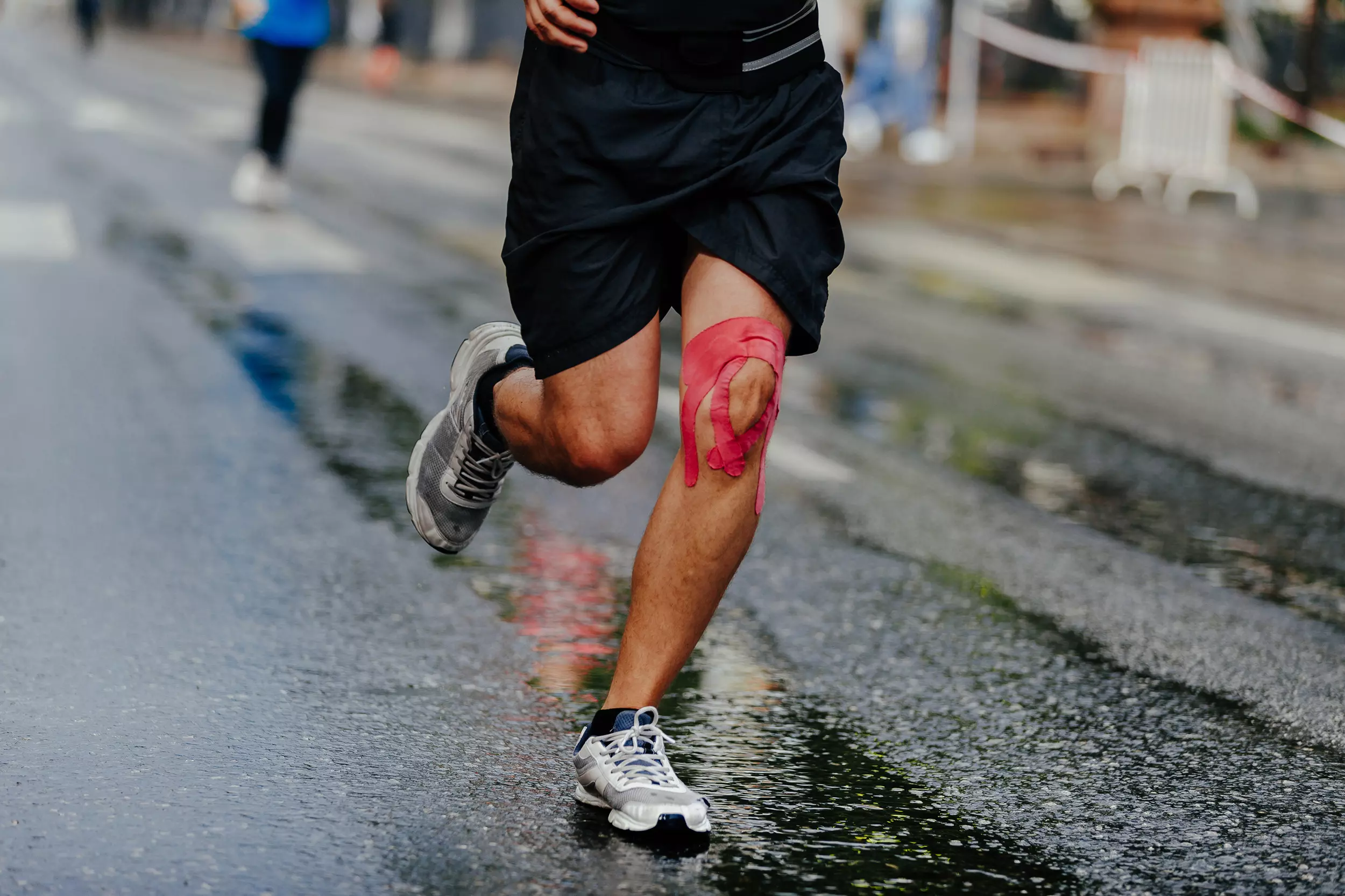
Based on the medical history, physical examination and imaging findings, the doctor diagnoses the patient with patellar tendinitis, also known as "runner's knee."
3. Treatment plan for the injury
3.1 Early phase (0-2 weeks)
3.1.1 Early phase goals
- Reduce pain and swelling
- Protection of the damaged tendon
- Avoidance of further overload
3.1.2 Therapeutic interventions
- Rest: Advise the patient to limit physical activity and avoid running for at least 1-2 weeks.
- Cooling: Applying ice packs for 15-20 minutes several times a day to reduce pain and swelling.
- Compression: Bandaging the knee with an elastic bandage to reduce swelling.
- Lift the limb: Lifting the leg on pillows while lying down to reduce swelling.
- Pain and anti-inflammatory medications: Using non-steroidal anti-inflammatory drugs (NSAIDs) to reduce pain and inflammation.
3.2 Intermediate phase (2-6 weeks)
3.2.1 Intermediate phase goals
- Continue to reduce pain and swelling
- Restore range of motion
- Strengthening the muscles around the knee
3.2.2 Therapeutic interventions
- Range of Motion Exercises: Gentle stretching and mobilization exercises to restore full range of motion to the knee joint.
- Strengthening exercises: Exercises to strengthen the quadriceps muscles of the thigh, gluteal muscles and hamstrings, such as squats with light loads, leg extensions on a machine or isometric exercises.
- Manual therapy: Massage, soft tissue techniques and joint mobilizations to reduce muscle tension and improve circulation.
- Kinesitherapy: Exercises in water, such as walking in a pool, can reduce stress on the knee joint and facilitate rehabilitation.
3.3 Late phase (6-12 weeks)
3.3.1 Late phase goals
- Achieve full range of motion
- Strengthen muscles and improve stability
- Preparing to return to running
3.3.2 Therapeutic interventions
- Advanced Strengthening Exercises: Introduce more intense strength exercises such as squats with heavier weights, weightlifting, leg extensions on a machine.
- Proprioception and coordination exercises: Exercises to improve balance and coordination, such as standing on one leg, walking on unstable surfaces or using a rehabilitation ball.
- Functional exercises: Exercises that mimic running movements, such as running on a treadmill with a gentle incline, sprints and running techniques.
3.4 Return to running phase (12 weeks or more)
3.4.1 Goals of the return to running phase
- Gradual return to running
- Prevention of injury recurrence
- Maintenance of healthy training habits
3.4.2 Therapeutic interventions
- Gradual introduction of running: Start with short, low-intensity runs and gradually increase the distance and intensity of training.
- Using appropriate footwear: Selecting appropriate running shoes with good cushioning and support for the knee joint.
- Patient education: Educating the patient on proper running technique, warm-up, stretching and recovery techniques.
- Progress monitoring: Regularly monitoring the patient's progress and adjusting the training plan as needed.
4. Effects of rehabilitation
4.1 Improvement in motor function
- Restoration of range of motion: The patient regained full range of motion in the knee joint, allowing him to freely perform daily activities and physical activities.
- Muscle Strengthening: With exercises to strengthen the quadriceps muscles of the thigh, gluteal muscles and hamstrings, the patient improved the stability of the knee joint.
4.2 Reduction of pain and inflammation
- Pain reduction: The use of manual therapy, physical therapy and pain reduction techniques contributed to a significant reduction in knee pain.
- Reduction of inflammation: Physical therapies such as cryotherapy and heat therapy helped reduce inflammation and swelling around the knee.
4.3 Return to running
- Gradual return: With the gradual introduction of running, the patient was able to return to regular running training without recurrence of the injury.
- Improvement of running technique: The patient's education and monitoring of running technique helped improve his technique, which reduced the risk of future injury.
4.4 Improved quality of life
- Return to normal activities: The patient returned to daily activities and participation in marathons and cross-country running, which improved his quality of life and well-being.
- Reduction of fear of injury recurrence: With therapeutic support and education, the patient gained confidence in his ability to continue running without fear of injury recurrence.
5. Challenges and ways to overcome them
5.1 Patient motivation
Keeping a patient motivated to exercise regularly and attend therapy sessions can be a challenge. Support from the therapist, family and friends, and setting realistic goals can help keep the patient engaged.
5.2 Gradual return to activity
A gradual return to running requires patience and strict adherence to therapy recommendations. It is important that the patient avoids over-exerting himself and listens to his body's signals.
5.3 Monitoring progress
Regularly monitoring the patient's progress and adjusting the rehabilitation plan as needed is key to successful treatment. The patient's cooperation with the therapist and open communication can help respond quickly to any problems.
5.4 Preventing recurrence of the injury
Patient education on proper running technique, footwear, warm-up and recovery is key to preventing injury recurrence. Regular strengthening and coordination exercises can also help maintain health and prevent injury.
Summary
Rehabilitation of running injuries is a key element in the process of recovery and full fitness. The case study presented in this article shows how a comprehensive treatment plan, including diagnosis, therapeutic interventions and patient education, can contribute to the successful treatment of running injuries.
The rehabilitation process after patellar tendonitis, known as "runner's knee," involves various stages, including the early phase, the intermediate phase, the late phase and the return to running phase. Each of these stages has its own goals and techniques, which are tailored to the individual patient's needs.
The effects of rehabilitation include improved motor function, reduction of pain and inflammation, gradual return to running, and improvement in the patient's quality of life. Challenges such as maintaining patient motivation, gradual return to activity, monitoring progress and preventing injury recurrence can be overcome with therapeutic support, patient education and open communication.
Runner's injury rehabilitation is an investment in health and quality of life with long-term benefits for both patients and society. Collaboration with qualified specialists, such as physicians, physiotherapists and manual therapists, is key to successful treatment and a return to full function.
Comments
Search
Add comment