Title: Kinesiotaping: what is it and how does it work?
Kinesiotaping is a modern therapeutic technique that uses elastic tapes to support muscles and joints, improve circulation, reduce pain and speed up healing processes. The technique has gained popularity among athletes, physiotherapists and physical therapists around the world for its effectiveness and versatility. In this article, we will discuss what kinesiotaping is, its principles, its benefits, and its main applications.
1. What is kinesiotaping?
1.1 Definition
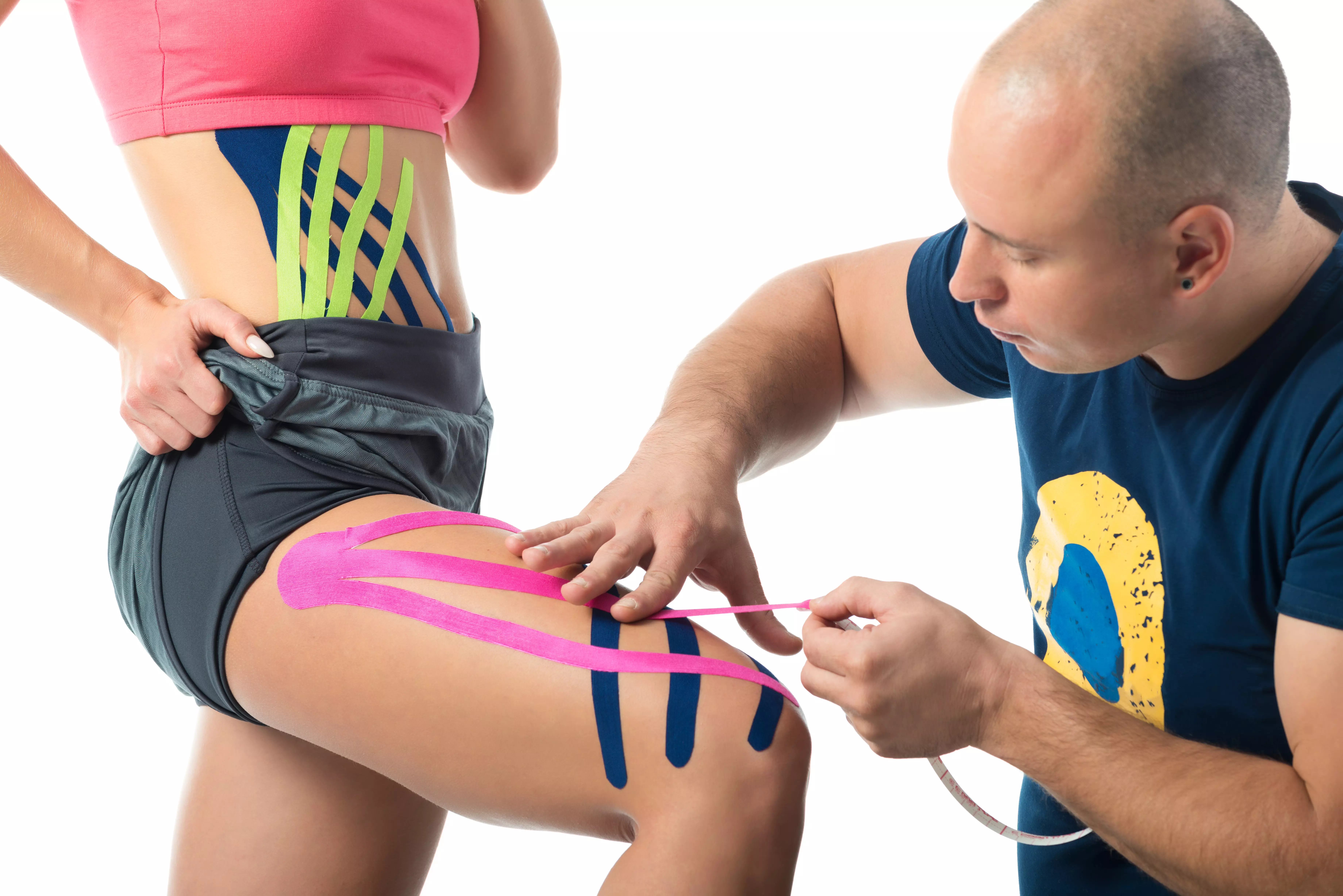
Kinesiotaping, also known as kinesiology taping, is a therapeutic method that involves applying elastic tapes to the skin to support muscles, joints and other body structures. Kinesiotaping tapes are made of cotton and elastic fibers, allowing them to stretch and contract with the body's movement. The technique was developed in the 1970s by Japanese chiropractor Dr. Kenzo Kase.
1.2 History of kinesiotaping
Kinesiotaping was developed in the 1970s by Dr. Kenzo Kase, who was looking for a therapeutic method that could promote the body's natural healing processes without restricting movement. Dr. Kase developed elastic tapes to support muscles and joints, improve circulation and reduce pain. The kinesiotaping technique quickly gained popularity in Japan and then around the world, especially among athletes and physiotherapists.
2. How does kinesiotaping work?
2.1 Principles of operation
Kinesiotaping works in several ways that help improve muscle, joint and soft tissue function:
- Mechanical support: Kinesiotaping tapes are flexible and can stretch with the body's movement, allowing them to support muscles and joints without restricting movement. Tapes can support weakened muscles, reduce excessive muscle tension and improve joint stability.
- Improve blood and lymph circulation: Kinesiotaping tapes lift the skin, which creates space between the skin and subcutaneous tissues. This, in turn, improves blood and lymph flow, which can promote the delivery of oxygen and nutrients to tissues and the removal of toxins and metabolic products.
- Pain Reduction: Kinesiotaping can help reduce pain by reducing pressure on pain receptors in the skin and improving blood and lymph circulation. The mechanical support of the tapes can also reduce stress on damaged tissues, which can help reduce pain.
- Improved proprioception: Kinesiotaping tapes can support the nervous system by providing additional sensory input to the skin and muscles. This, in turn, can improve proprioception, the body's ability to feel and control position and movement.
2.2 Kinesiotaping tape application techniques
Kinesiotaping tapes can be used in a variety of application techniques, depending on the therapeutic goal:
- Muscle technique: Kinesiotaping tape is applied along a muscle to promote its function, reduce tension or improve circulation. This technique can be used for muscle weakness, excessive muscle tension and muscle injuries.
- Ligament Technique: Kinesiotaping tape is applied along the ligament to improve its stability and promote joint function. This technique can be used for sprains, strains and joint instability.
- Corrective Technique: Kinesiotaping tape is applied to correct abnormal posture or movement. This technique can be used for postural defects, body asymmetry and biomechanical disorders.
- Lymphatic Technique: Kinesiotaping tape is applied to improve lymph flow and reduce swelling. This technique can be used for lymphedema, hematoma and inflammation.
- Fascia Technique: Kinesiotaping tape is applied to promote fascial function and improve soft tissue elasticity. This technique can be used for adhesions, fascial strains and movement restrictions.
3. Benefits of kinesiotaping
3.1 Reduction of pain
One of the main effects of kinesiotaping is pain reduction. Kinesiotaping tapes can reduce pressure on pain receptors in the skin, which can help reduce pain. Improved blood and lymph circulation and the mechanical support of the tapes can also reduce stress on damaged tissues, which can relieve pain.
3.2 Improving blood and lymph circulation
Kinesiotaping can improve blood and lymph circulation by lifting the skin and creating space between the skin and subcutaneous tissues. This, in turn, can promote the delivery of oxygen and nutrients to tissues and the removal of toxins and metabolic products. Improved circulation can promote healing and tissue regeneration.
3.3 Supporting muscles and joints
Kinesiotaping tapes can support muscles and joints without restricting movement, which can help improve musculoskeletal function. Mechanical tape support can reduce excessive muscle tension, support weakened muscles, and improve joint stability.
3.4 Improving proprioception
Kinesiotaping can support the nervous system by providing additional sensory input to the skin and muscles. This, in turn, can improve proprioception, the body's ability to feel and control position and movement. Improving proprioception can promote motor coordination and reduce the risk of injury.
3.5 Reducing swelling
Kinesiotaping can help reduce swelling by improving lymph and blood flow. This technique can be used for lymphedema, hematoma and inflammation. Improving lymphatic circulation can promote the removal of excess fluid and toxins from tissues.
3.6 Supporting natural healing processes
Kinesiotaping supports the body's natural healing processes by improving circulation, reducing muscle tension and restoring balance in the body. The mechanical support of the tapes and sensory effects can promote regenerative processes in damaged tissues.
4. Kinesiotaping applications
4.1 Treatment of sports injuries
Kinesiotaping is widely used to treat sports injuries such as sprains, dislocations, muscle and tendon strains. Kinesiotaping tapes can promote healing, reduce pain and swelling, and improve the function of damaged structures.
4.1.1 Sprains and dislocations
Kinesiotaping tapes can promote joint stability and reduce pain and swelling in sprains and dislocations. The mechanical support of the tapes can reduce ligament stress and improve joint function.
4.1.2 Muscle and tendon strains
Kinesiotaping can promote the healing process for muscle and tendon strains, reducing pain and muscle tension and improving circulation. Kinesiotaping tapes can support weakened muscles and improve tendon function.
4.2 Treatment of chronic pain
Kinesiotaping is also effective in treating chronic pain conditions, such as back pain, joint pain and fibromyalgia. Kinesiotaping tapes can reduce pressure on pain receptors in the skin and improve blood and lymph circulation, which can relieve chronic pain.
4.2.1 Back pain
Kinesiotaping can support the treatment of lumbar, thoracic and cervical spine pain. Kinesiotaping tapes can reduce muscle tension, improve circulation and promote spinal stability.
4.2.2 Joint pain
Kinesiotaping tapes can provide relief for joint pain, such as knee, hip, shoulder and wrist joints. The mechanical support of the tapes can improve joint function and reduce pain and swelling.
4.2.3 Fibromyalgia
Kinesiotaping can help relieve chronic muscle pain and fatigue in patients with fibromyalgia. Kinesiotaping tapes can improve circulation, reduce muscle tension and promote recovery.
4.3 Rehabilitation after surgery
Kinesiotaping plays a key role in rehabilitation after orthopedic surgeries, such as joint replacement, ligament reconstruction and spinal surgery. Kinesiotaping tapes can promote healing, reduce pain and swelling, and improve the function of the operated structures.
4.3.1 Joint endoprosthesis
Kinesiotaping can support healing processes after hip or knee replacement surgery. Kinesiotaping tapes can reduce pain and swelling and improve circulation, which speeds up the regenerative processes.
4.3.2 Ligament reconstruction
Kinesiotaping tapes can promote tissue regeneration after ligament reconstruction surgery, reducing pain and muscle tension and improving joint stability. The mechanical support of the tapes can promote healing processes and speed up the return to full function.
4.3.3 Spinal surgeries
Kinesiotaping can support healing processes after spinal surgeries, reducing pain and inflammation and improving mobility. Kinesiotaping tapes can promote spinal stability and support regenerative processes in damaged tissues.
4.4 Treatment of inflammation
Kinesiotaping is effective in treating various inflammatory conditions, such as tendonitis, arthritis and chronic muscle inflammation. Kinesiotaping tapes can reduce inflammation, reduce swelling and promote healing.
4.4.1 Tendonitis
Kinesiotaping can support the treatment of tendonitis, reducing inflammation and pain and improving tendon function. Kinesiotaping tapes can support regenerative processes and speed up the return to full function.
4.4.2 Arthritis
Kinesiotaping tapes can help treat arthritis by reducing inflammation and pain and improving joint mobility. The mechanical support of the tapes can promote healing and improve joint function.
4.5 Treatment of pain syndromes
Kinesiotaping is also effective in treating various pain syndromes, such as painful shoulder syndrome, carpal tunnel syndrome and painful elbow syndrome (tennis elbow, golfer's elbow). Kinesiotaping tapes can reduce pain, improve joint stability and promote healing.
4.5.1 Painful shoulder syndrome
Kinesiotaping can support the treatment of painful shoulder syndrome, reducing pain and inflammation and improving mobility of the shoulder joint. Kinesiotaping tapes can promote joint stability and support recovery processes.
4.5.2 Carpal tunnel syndrome
Kinesiotaping tapes can relieve pain and inflammation and promote healing processes in carpal tunnel syndrome. Mechanical support of the tapes can reduce pressure on the nerves and improve wrist function.
4.5.3 Painful elbow syndrome (tennis elbow, golfer's elbow)
Kinesiotaping can support the treatment of painful elbow syndromes by reducing pain and inflammation and improving elbow joint function. Kinesiotaping tapes can promote regenerative processes and reduce muscle tension.
5. Contraindications and precautions
5.1 Contraindications
Although kinesiotaping is safe and effective, there are some contraindications to its use. Kinesiotaping should be avoided in the following cases:
- Open wounds and skin damage: Kinesiotaping tapes should not be used on open wounds, cuts or skin injuries.
- Dermal allergies: Patients with skin allergies to the adhesive used in kinesiotaping tapes may experience an allergic reaction.
- Dermal infections: Kinesiotaping should not be used in areas with bacterial, viral or fungal infections.
- Advanced vascular disease: Kinesiotaping may be contraindicated in patients with advanced vascular disease, such as deep vein thrombosis.
- Neoplasms: Kinesiotaping should not be used in the area of tumors to avoid the risk of spreading cancer cells.
5.2 Precautions
When using kinesiotaping, certain precautions should be observed to ensure the safety and effectiveness of the therapy:
- Consult a physiotherapist: Before starting kinesiotaping, consult a physiotherapist or rehabilitation specialist to assess whether the method is suitable for the patient.
- Proper skin preparation: The skin should be clean and fully dry before applying the tape to ensure proper adhesion. The skin can be cleaned with alcohol to improve tape adhesion.
- Correct application technique: Kinesiotaping tapes should be applied as recommended by a specialist to ensure proper support and effectiveness of the therapy. Improper application can lead to a lack of therapeutic effects or even worsen the patient's condition.
- Dermal monitoring: The patient should monitor the skin under the tape and remove the tape immediately if irritation, redness, itching or other signs of an allergic reaction occur. Avoid applying the tapes to damaged or sensitive skin.
- Avoid excessive tension: Kinesiotaping tapes should not be applied with excessive tension, as this can lead to discomfort or restricted movement. Too little tension, in turn, may not provide adequate support.
- Regular tape replacement: Kinesiotaping tapes should be replaced every 3-5 days to ensure hygiene and effectiveness of the therapy. Before reapplying the tapes, the skin should be thoroughly cleaned.
- Exercise and physical activity: Patients using kinesiotaping can continue exercise and physical activity, but should avoid overexertion and overload, which can lead to injury.
Summary
Kinesiotaping is a modern and versatile therapeutic technique that uses elastic tapes to support muscles, joints and other body structures. The technique was developed in the 1970s by Dr. Kenzo Kase and quickly gained popularity around the world, especially among athletes, physiotherapists and physical therapists. Kinesiotaping works by providing mechanical support, improving blood and lymph circulation, reducing pain and improving proprioception.
Benefits of kinesiotaping include reducing pain, improving circulation, supporting muscles and joints, improving proprioception, reducing swelling and promoting natural healing processes. Kinesiotaping is widely used in the treatment of sports injuries, chronic pain, inflammation and rehabilitation after surgery.
Although kinesiotaping is safe and effective, there are certain contraindications and precautions that must be observed to ensure the safety and effectiveness of the therapy. Consultation with a physiotherapist, proper skin preparation and monitoring of skin reactions are key to the safe use of kinesiotaping.
With an individualized approach to each patient and a variety of application techniques, kinesiotaping can provide numerous health benefits and improve patients' quality of life.
Add comment