Title: Hydrotherapy: benefits and applications
Hydrotherapy, also known as water therapy, is one of the oldest forms of treatment that uses the properties of water to treat a variety of conditions, improve health and promote rehabilitation. Water can be used in various forms - as liquid, steam or ice - depending on the therapeutic goal. Hydrotherapy is an extremely versatile treatment method that offers numerous physical, emotional and psychological benefits. In this article, we will discuss what hydrotherapy is, its main benefits and applications, and which hydrotherapeutic techniques are most commonly used.
1. What is hydrotherapy?
1.1 Definition
Hydrotherapy is a method of treatment that uses water in various forms - liquid, steam or ice - to treat various conditions, promote rehabilitation and improve the overall health and well-being of patients. Hydrotherapy can be used in the form of baths, showers, compresses, water massages, saunas, steam inhalations and other techniques.
1.2 History of hydrotherapy
Hydrotherapy has a long history, dating back to ancient civilizations. Hydrotherapeutic practices were used in ancient Egypt, Greece, Rome and India to treat various ailments. The ancient Greeks and Romans were known for their thermal baths and public baths that offered healing and relaxation baths. Modern hydrotherapeutic techniques have evolved over the centuries, combining traditional methods with modern scientific research and therapeutic approaches.
2. Benefits of hydrotherapy
2.1 Pain reduction
One of the main effects of hydrotherapy is pain reduction. Warm water can provide relief from muscle and joint pain by reducing muscle tension, improving circulation and promoting natural healing processes. Cold water can reduce inflammation and pain, thanks to its anti-inflammatory properties.
2.2 Improving circulation
Hydrotherapy can improve blood and lymph circulation, supporting the health of the circulatory system. Warm water dilates blood vessels, improving blood flow, while cold water constricts blood vessels, which can promote circulation and reduce swelling.
2.3 Reducing muscle tension
Hydrotherapy can help reduce muscle tension by improving muscle flexibility and joint range of motion. Warm water can help relax muscles, reducing tension and pain, while water massages can promote muscle recovery after intense exercise.
2.4 Supporting natural healing processes
Hydrotherapy supports the body's natural healing processes by improving circulation, reducing muscle tension and restoring balance to the body. Hydrotherapy techniques can help restore full function to the musculoskeletal system and support the body's ability to heal itself.
2.5 Increasing tissue flexibility and strength
Hydrotherapy can improve tissue elasticity and strength, which is key to maintaining full musculoskeletal functionality. Warm water can increase the flexibility of muscles and joints, while water exercises can promote muscle endurance.
2.6 Improving nervous system function
Hydrotherapy can improve nervous system function by stimulating nerves and improving circulation. Hydrotherapy techniques can help reduce neuropathic pain, improve coordination and balance.
2.7 Reducing stress and improving well-being
Hydrotherapy can help reduce stress and improve patients' well-being by relaxing muscles, reducing tension and improving circulation. Warm water and water massages can support patients' mental health, helping them cope with stress and improve their quality of life.
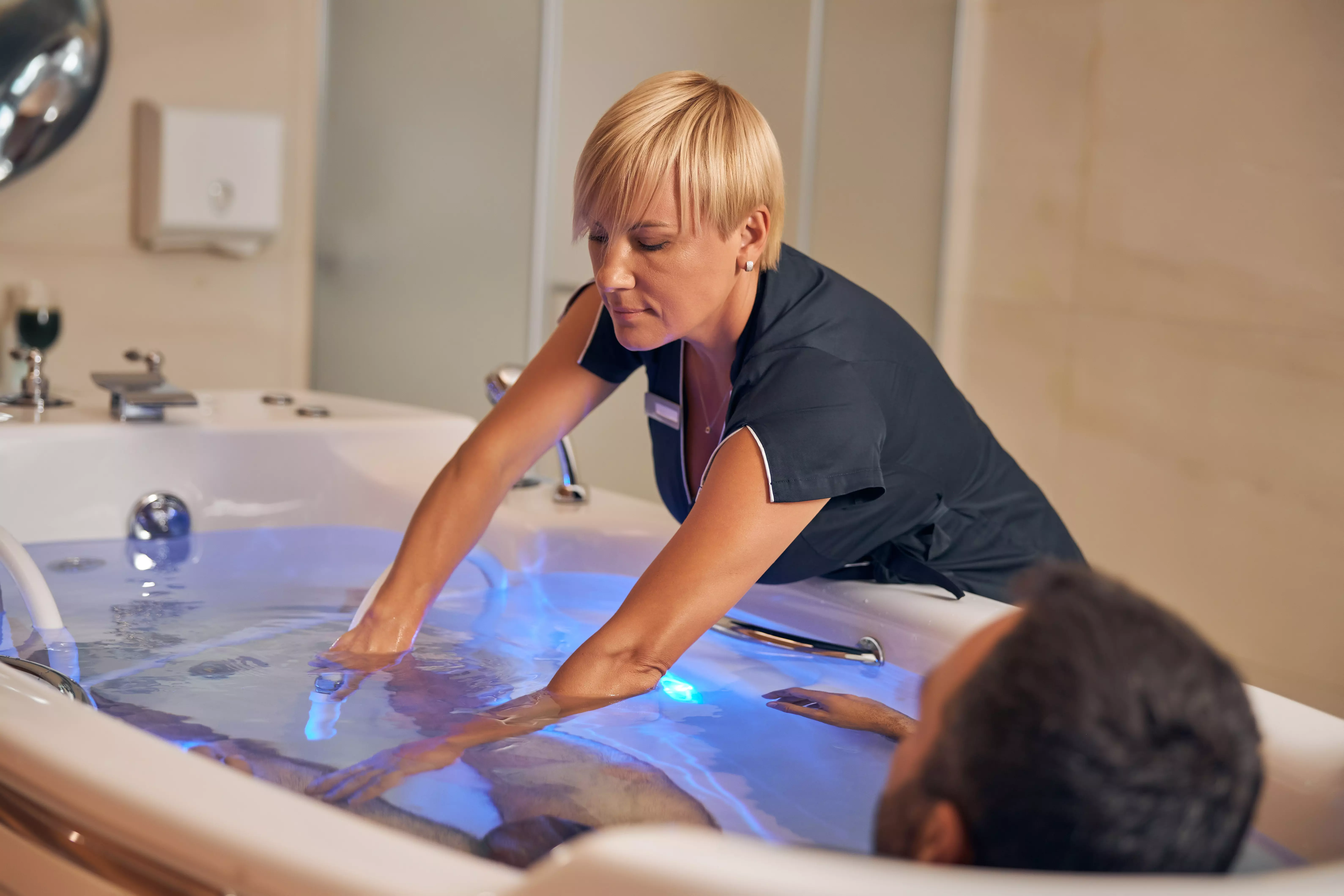
3. Hydrotherapeutic techniques
3.1 Therapeutic baths
3.1.1 Description
Therapeutic baths are one of the most popular forms of hydrotherapy, which involves immersing the body in warm or cold water to treat various ailments. Therapeutic baths can include bathing in a bathtub, pool or natural thermal springs.
3.1.2 Applications
- Muscle and joint pain reduction: Warm baths can help relieve muscle and joint pain by reducing muscle tension and improving circulation.
- Relaxation: Therapeutic baths can help reduce stress and tension, promoting overall relaxation and well-being.
- Rehabilitation after injury: Therapeutic baths can promote healing after injuries such as sprains, dislocations and muscle strains.
- Improving circulation: Therapeutic baths can improve blood and lymph circulation, supporting the health of the circulatory system.
3.2 Healing showers
3.2.1 Description
Therapeutic showers are a hydrotherapeutic technique that involves using streams of water at different temperatures and pressures to treat various ailments. Therapeutic showers can include alternating showers, scotch showers and whip showers.
3.2.2 Applications
- Muscle Tension Reduction: Therapeutic showers can help reduce muscle tension and relax muscles.
- Improving circulation: Alternating showers and scotch showers can improve blood and lymph circulation, promoting cardiovascular health.
- Pain Reduction: Water whip showers can help reduce musculoskeletal pain by massaging with water jets.
- Stimulation of the nervous system: Therapeutic showers can stimulate the nervous system, improving coordination and balance.
3.3 Water packs
3.3.1 Description
Water packs are a hydrotherapeutic technique that involves the use of packs soaked in warm or cold water to treat various ailments. Water packs can include hot packs, cold packs and alternate packs.
3.3.2 Applications
- Pain Reduction: Warm compresses can help relieve muscle and joint pain, while cold compresses can reduce pain from injuries and inflammation.
- Inflammation Reduction: Cold packs can help reduce inflammation, reducing swelling and pain.
- Muscle relaxation: Warm packs can help relax muscles and reduce muscle tension.
- Improving circulation: Alternating wraps can improve blood and lymph circulation, promoting cardiovascular health.
3.4 Water massages
3.4.1 Description
Water massages are a hydrotherapeutic technique that involves using jets of water at different temperatures and pressures to massage the body to treat various ailments. Water massages can include Jacuzzi massages, pool massages and massages in special whirlpool tubs.
3.4.2 Applications
- Pain Reduction: Water massages can help relieve muscle and joint pain by reducing muscle tension and improving circulation.
- Relaxation: Water massages can help reduce stress and tension, promoting overall relaxation and well-being.
- Rehabilitation after injury: Water massages can support the healing process after injuries such as sprains, dislocations or muscle strains.
- Improving circulation: Water massages can improve blood and lymph circulation, supporting cardiovascular health.
3.5 Saunas and steam rooms
3.5.1 Description
Saunas and steam baths are hydrotherapeutic techniques that involve the application of heat and steam to treat various ailments and improve overall health and well-being. Saunas can include dry (Finnish) saunas and steam (Turkish) saunas, while steam baths can include various forms of steam inhalation.
3.5.2 Applications
- Pain Reduction: Saunas and steam baths can help relieve muscle and joint pain by reducing muscle tension and improving circulation.
- Detoxification: Saunas and steam rooms can support the body's natural detoxification processes, improving circulation and removing toxins.
- Relaxation: Saunas and steam rooms can help reduce stress and tension, promoting overall relaxation and well-being.
- Improving skin health: Saunas and steam rooms can improve skin health by promoting cleansing and hydration.
3.6 Steam inhalations
3.6.1 Description
Steam inhalations are a hydrotherapeutic technique that involves inhaling steam to treat various respiratory ailments and improve overall health and well-being. Steam inhalations may include inhalations with essential oils and herbs.
3.6.2 Applications
- Treatment of respiratory conditions: Steam inhalations can help relieve the symptoms of respiratory conditions such as the common cold, flu, sinusitis, asthma and chronic obstructive pulmonary disease (COPD).
- Improving skin health: Steam inhalations can support skin health by opening pores and promoting cleansing.
- Relaxation: Steam inhalations can help reduce stress and tension, promoting overall relaxation and well-being.
3.7 Water exercise (aqua aerobics)
3.7.1 Description
Exercise in water, also known as aqua aerobics, is a hydrotherapeutic technique that involves performing physical exercises in a pool to improve physical fitness, rehabilitate and treat various ailments. Exercises in water can include water gymnastics, swimming, water walking and other forms of physical activity.
3.7.2 Applications
- Rehabilitation after injury: Exercising in water can promote healing after injury, reducing stress on joints and promoting muscle recovery.
- Improving Fitness: Exercising in water can improve endurance, muscle strength, flexibility and coordination.
- Pain Reduction: Water exercise can help relieve musculoskeletal pain by reducing muscle tension and improving circulation.
- Promoting cardiovascular health: Water exercise can support cardiovascular health by improving circulation and cardiorespiratory fitness.
4. Contraindications and Precautions
4.1 Contraindications
Although hydrotherapy is safe and effective, there are some contraindications to its use. Hydrotherapy should be avoided in the following cases:
- Heart diseases: Hydrotherapy may be contraindicated in patients with uncontrolled heart disease, such as heart failure or advanced coronary artery disease.
- Hypertension: Hydrotherapy may be contraindicated in patients with uncontrolled hypertension.
- Dermal infections: Hydrotherapy should not be used in patients with active skin infections to avoid the risk of spreading infection.
- Severe inflammation: Hydrotherapy may be contraindicated for acute inflammatory conditions, such as acute arthritis or acute trauma.
- Pregnancy: Some forms of hydrotherapy, such as saunas and hot baths, may be contraindicated in pregnant women.
4.2 Precautions
Certain precautions should be observed when using hydrotherapy to ensure the safety and effectiveness of the therapy:
- Consult a doctor: Before starting hydrotherapy, consult a doctor or physical therapist to assess whether the therapy is suitable for the patient.
- Patient monitoring: The therapist should monitor the patient during hydrotherapy to ensure comfort and safety and adjust therapeutic techniques as needed.
- Appropriate water temperature setting: The water temperature should be adjusted according to the patient's individual needs and therapeutic goals.
- Avoidance of overload: Exercises in the water should be tailored to the patient's individual capabilities to avoid overload and injury.
Summary
Hydrotherapy is a versatile and effective treatment method that uses the properties of water to treat various conditions, improve health and promote rehabilitation. Hydrotherapy techniques such as therapeutic baths, therapeutic showers, water wraps, water massages, saunas, steam baths, steam inhalations and water exercises can provide numerous health benefits, such as reducing pain, improving circulation, reducing muscle tension, promoting natural healing processes, increasing tissue flexibility and strength, improving nervous system function, and reducing stress and improving well-being.
Add comment